
Fill in your details and our team will be in touch to confirm a time. Ensure to scroll down to answer all the questions & to submit the form.
Walk in, walk out
No stitches
No need for anaesthetist
No skin cutting
Dr. Thomaz Silva – About ultrasound-guided carpal tunnel release.
This technique releases the transverse ligament with nearly no incision, guided by ultrasound that allows direct, real-time observation of important structures. The procedure is performed through a hollow needle called a cannula, with very little soft tissue damage and bleeding.
Under ultrasonic guidance, a cutting tool is placed through the cannula and advanced to the transverse carpal ligament, which is then released. The wound does not need to be closed with stitches, as access was obtained with a needle. The resulting scar is at least 10 times smaller than traditional methods, and patients typically experience a more rapid and complete return to work and usual activities, at least 1 to 2 weeks sooner than open surgery.
Nearly no incision
Dr. Thomaz Silva – About ultrasound-guided carpal tunnel release.
Disclaimer: This video contains graphic content involving a surgical procedure.
Disclaimer: This video contains graphic content involving a surgical procedure.
Endoscopic release is a minimally invasive surgical technique that relieves pressure on the median nerve using one or two small tubular devices, with smaller cuts than traditional open surgery.
A 2 to 3cm cut is made on the wrist, and an endoscope, a tube with a camera attached, is positioned under the carpal ligament. Cutting tools are guided through a second 2 to 3cm cut on the palm of the hand. The endoscope lets the doctor see structures in the wrist, most importantly the transverse carpal ligament, without creating a large incision.
Traditional Approach
Disclaimer: This video contains graphic content involving a surgical procedure.
Mini-Open Carpal Tunnel Release is a traditional surgical method that requires an incision over the carpal tunnel area to directly access and cut the transverse carpal ligament.
A large 6-7cm cut is made on the palm of the hand and tissues below the skin are cut and moved aside so the doctor can see the transverse carpal ligament.
Once the ligament is cut, the pressure in the nerve is released. The tissues scar up deeply and superficially. This method allows the doctor to identify the structures through direct vision, avoiding injury to important structures. To reach the transverse carpal tissue (carpal tunnel tissue) which lies deeper, the doctor must cut through fatty tissues and a thick protective tissue called the palmar fascia. This can result in a thicker and more sensitive scar.
This approach leads to longer recovery & scarring compared to the other two options. The usual time for the tissue to heal is 6-8 weeks, with the scar typically taking longer.
This method allows direct visual identification of structures, helping to avoid injury to important tissue. To reach the carpal tunnel tissue, which lies deeper, the surgeon must cut through fatty tissue and a thick protective layer called the palmar fascia. This can result in a thicker, more sensitive scar, with tissue scarring both deeply and superficially. This approach generally leads to a longer recovery and more noticeable scarring compared to the other two options.
Direct visualisation
Longest recovery
Disclaimer: This video contains graphic content involving a surgical procedure.
A visual comparison of typical scarring after each procedure. Individual healing varies, and these images are illustrative rather than a guarantee of outcome.
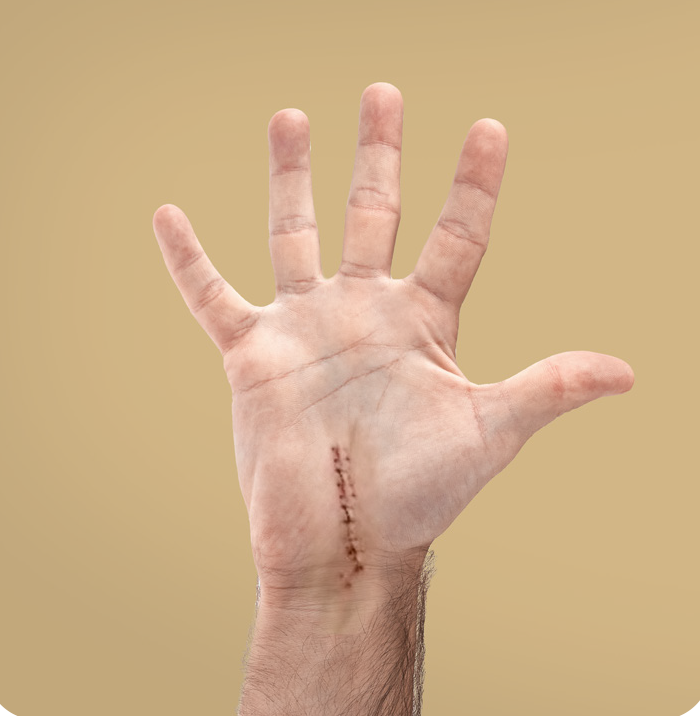
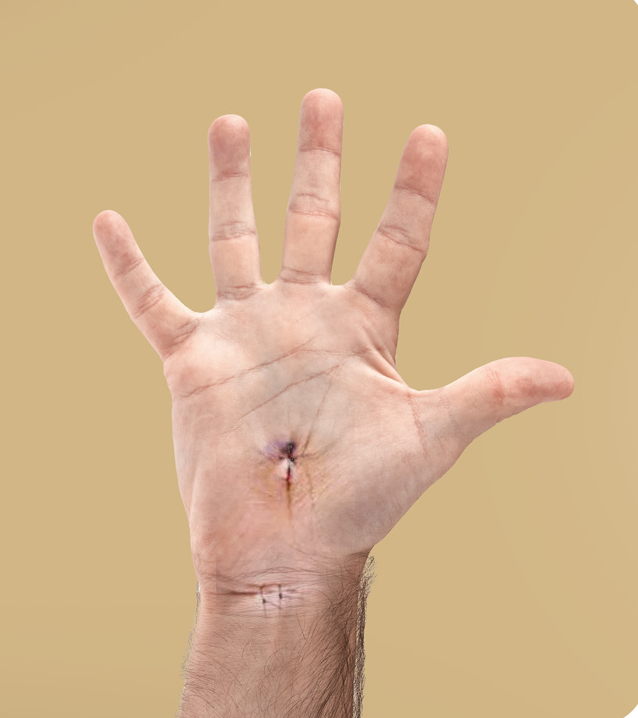
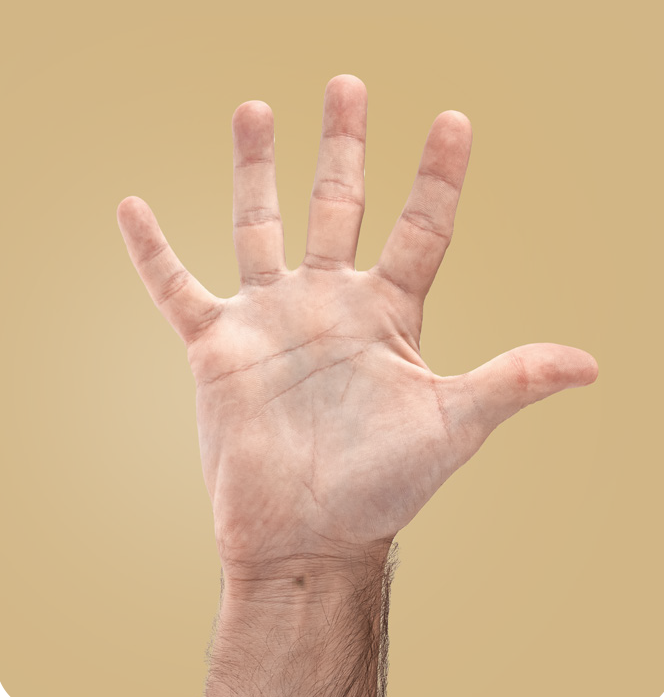
| Consideration | Ultrasound Guided Micro-Invasive | Endoscopic Release | Mini-Open Release |
|---|---|---|---|
| Access point | Hollow needle (cannula), nearly no incision | One or two cuts, 2 to 3cm each | Single cut, 6 to 7cm |
| Visualisation | Real-time ultrasound imaging | Endoscope camera | Direct vision |
| Stitches required | No | Yes, typically | Yes |
| Scarring | At least 10x smaller than traditional methods | Smaller than open surgery, two scars | Larger, deeper and superficial scarring |
| Return to normal activity | Fastest, 1 to 2 weeks sooner than open surgery | Faster than open surgery | Longest recovery period |
Every procedure is carried out by a medical practitioner registered with the Australian Health Practitioner Regulation Agency. [Insert registration number/link for verification]
Our technique is taught and credentialed through the CMPM, which sets training standards for the micro-invasive release procedure across Australia.
Our pioneering work with the micro-invasive 'iBlade' technique has been covered by national news, reflecting growing recognition of this approach in Australia.
A documented track record across our clinics in Sydney, Canberra and Adelaide, with outcomes and recovery data discussed openly during consultations.
Perth